

Contact No.:+91 7300280120


About "ChatG"
"ChatG brings better services"
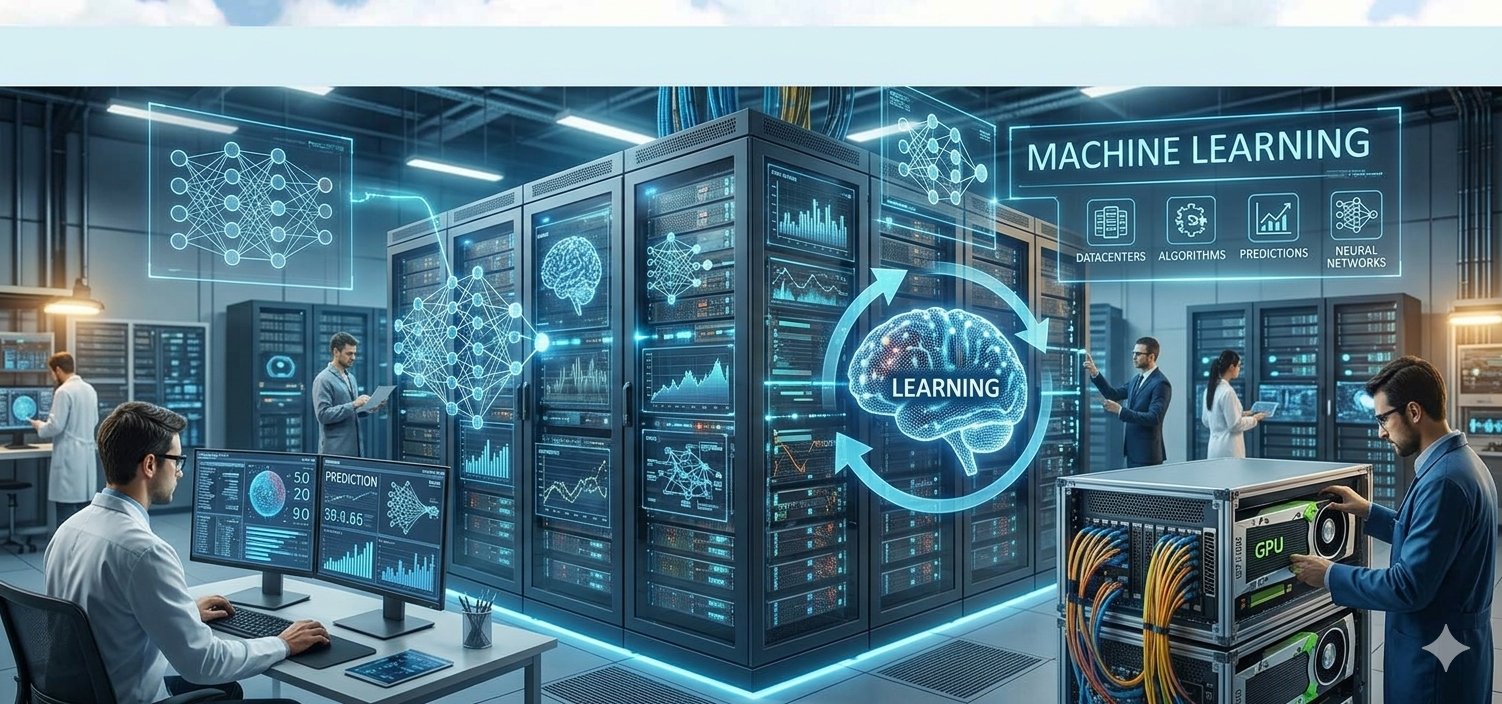
Artificial Intelligence & Machine Learning Artificial Intelligence (AI) and Machine Learning (ML) are transforming how complex problems are understood, modelled and solved. AI enables systems to analyse information, identify patterns and support intelligent decision-making, while ML enables systems to learn from data and continuously improve their predictions and performance. Our research focus is on applying AI and ML to engineering, energy and other technology-intensive domains, where large datasets, computational modelling and optimisation can significantly accelerate innovation. We explore data-driven simulation, predictive modelling, optimisation algorithms and intelligent decision-support systems to reduce development time, improve efficiency and enable more informed engineering decisions.
Researching the Next Generation of AI The next phase of AI research is moving beyond conventional prediction and automation toward reasoning, multimodal intelligence, autonomous AI agents and AI-assisted scientific discovery. Researchers are increasingly developing systems capable of combining different forms of data, generating and testing hypotheses, writing and optimising computational models, and supporting complex research workflows.
We are particularly interested in emerging areas such as:
AI-driven simulation and optimisation for complex engineering systems
You Should Choose ChatG For
- AI-driven simulation and optimisation for complex engineering systems
- Predictive and prescriptive analytics for energy and technology applications
- Multimodal AI combining numerical, visual, textual and sensor-based information
- AI agents and autonomous research systems capable of performing multi-step analytical workflows
Methodology
- Digital twins and intelligent simulation environments
- AI-assisted discovery, where machine learning helps generate hypotheses, analyse large datasets and identify previously unseen patterns
- Responsible and explainable AI, with emphasis on reliability, transparency, safety and human oversight
Data Analytics & Next-Generation Research
WHY SHOULD WE HIRE ChatG Consultancy
- Data Analytics is the process of transforming large and complex datasets into meaningful insights that support better decision-making, optimisation and innovation. With the rapid growth of connected systems, sensors, simulations and digital platforms, advanced analytics is becoming an essential component of modern engineering and technology development.
- Our focus is on exploring advanced data analytics techniques to process, interpret and model complex datasets generated from engineering simulations, operational systems and real-world environments. We aim to use data-driven approaches to identify patterns, predict outcomes, optimise performance and support intelligent decision-making.
- Exploring the Next Generation of Data Analytics. The next generation of analytics is moving beyond traditional reporting and historical analysis toward real-time intelligence, predictive modelling, autonomous analytics and AI-driven decision systems. Emerging research combines advanced machine learning, large-scale data processing, simulation and intelligent automation to extract deeper insights from increasingly complex datasets.
- Our areas of research and exploration include: 1) Predictive and prescriptive analytics for forecasting and optimisation 2) Real-time data analytics for monitoring complex systems and identifying anomalies 3) AI-driven data processing for large and unstructured datasets 4) Digital twins and simulation-based analytics for modelling real-world systems 5) Time-series and sensor-data analytics for performance and condition monitoring 6) Anomaly and risk detection for identifying potential failures and safety concerns 7) Data-driven optimisation for improving efficiency, reliability and resource utilisation 8) Automated analytics and intelligent decision-support systems 9) Edge and distributed analytics for processing data closer to where it is generated 10) Explainable and trustworthy analytics to improve transparency and reliability Our objective is to advance the use of data as an intelligent resource—combining analytics, AI and computational modelling to transform complex datasets into actionable insights and enable the development of smarter, more efficient and reliable technology systems
Augmented & Virtual Reality (AR/VR)
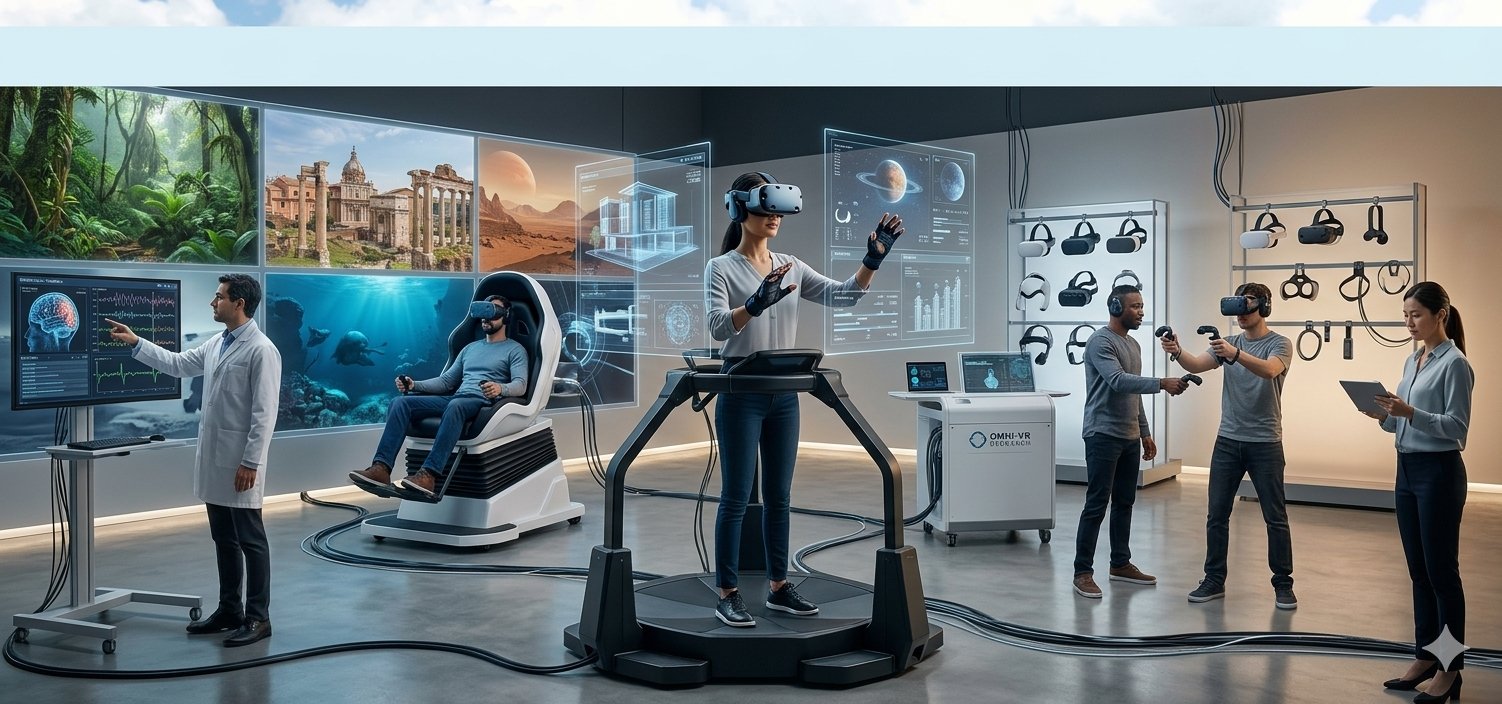
- Augmented Reality (AR) and Virtual Reality (VR) are transforming the way people interact with digital information and complex technological environments. AR overlays digital content onto the real world, while VR creates immersive, computer-generated environments for simulation, visualisation, training and interaction. Our research focus is on exploring AR/VR as advanced tools for engineering visualisation, simulation, training and human-machine interaction. These technologies can enable complex systems to be visualised and experienced digitally before physical implementation, helping improve understanding, collaboration and development efficiency.
Exploring the Next Generation of AR/VR
-
The next generation of AR/VR research is moving toward spatial computing, intelligent
immersive environments, real-time 3D interaction and AI-powered experiences.
Advances in computer vision, artificial intelligence, sensors and 3D modelling are enabling
immersive systems to understand physical environments and respond intelligently to users.
Our areas of research and exploration include:
1) Spatial computing for interaction with digital content in physical environments
2) AI-powered immersive environments that adapt to user behaviour and requirements
3) 3D simulation and digital twins for engineering and industrial applications
4) Virtual prototyping and design visualisation before physical development
5) Immersive training and simulation for complex technical systems
6) Computer vision and environment understanding for intelligent AR applications
7) Real-time 3D visualisation and interactive modelling
8) Human-machine interaction using gesture, voice and spatial interfaces
9) Collaborative virtual environments for distributed engineering and development teams
10) Integration of AR/VR with AI, IoT and simulation technologies
Our objective is to explore how immersive technologies can bridge the gap between the physical and digital worlds, creating intelligent visualisation and simulation environments that support better engineering, faster innovation, improved training and more effective human-technology interaction
Advanced Robotics
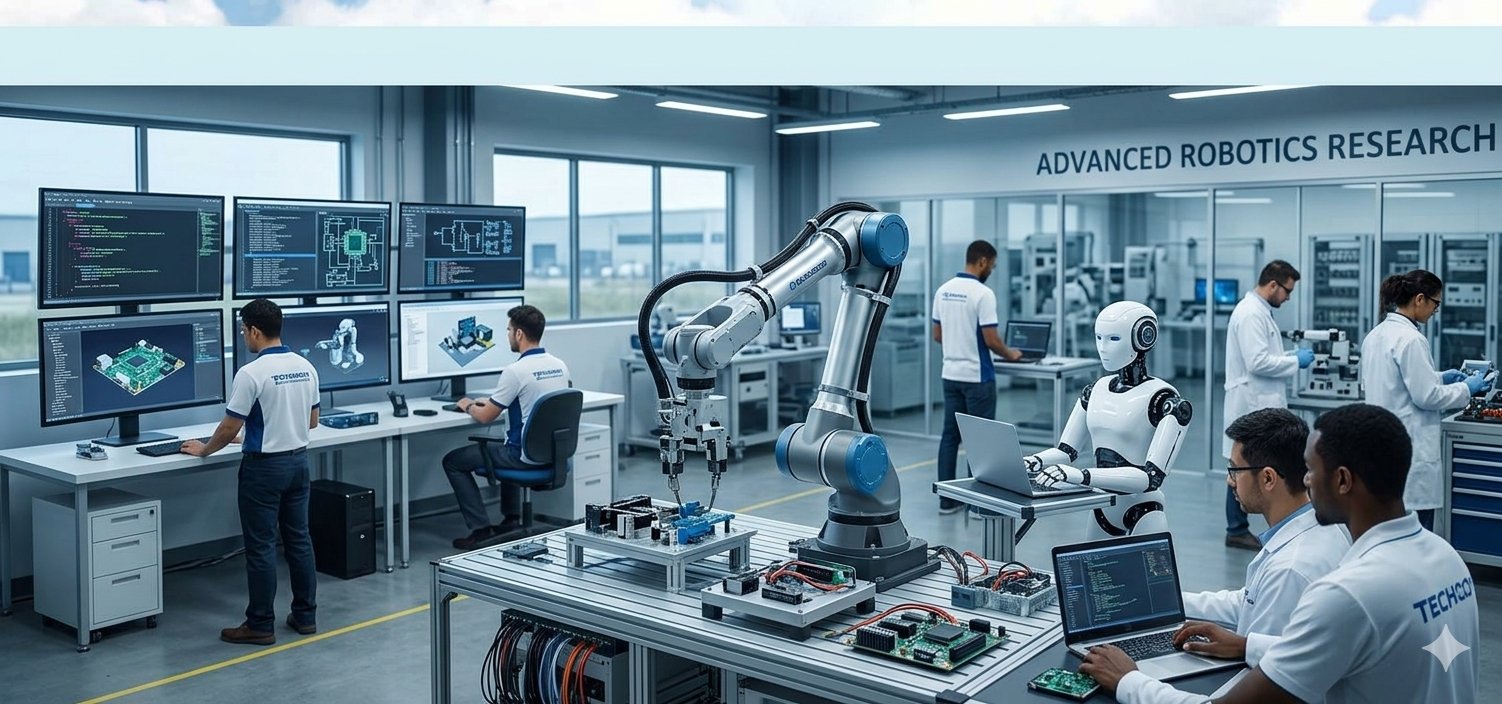
- Advanced Robotics combines mechanical engineering, electronics, artificial intelligence, sensing and software to create machines capable of performing complex tasks with increasing levels of autonomy and precision. Modern robotics is evolving beyond repetitive industrial automation toward intelligent systems that can perceive their surroundings, learn from data, make decisions and interact safely with people.
- Our research focus is on exploring AI-enabled robotics, intelligent automation and autonomous systems for applications where precision, efficiency, safety and adaptability are critical. We investigate the integration of robotics with AI, machine learning, computer vision, sensors and real-time data analytics to develop more capable and responsive robotic systems.
Exploring the Next Generation of Robotics
-
The next generation of robotics is moving toward autonomous, adaptive and collaborative
robots capable of operating in dynamic and unpredictable environments. Advances in AI,
multimodal perception, simulation and embodied intelligence are enabling robots to
understand their surroundings, learn new tasks and interact more naturally with humans.
Our areas of research and exploration include:
1) AI-powered autonomous robots capable of intelligent decision-making
2) Computer vision and multimodal perception for environmental understanding
3) Robotic learning and reinforcement learning for adaptive task execution
4) Humanoid and mobile robotics for complex real-world environments
5) Human-robot collaboration and intelligent interaction
6) Autonomous navigation and motion planning
7) Digital twins and simulation-based robotics for virtual testing and optimisation
8) Robotics combined with IoT and real-time data analytics
9) Swarm robotics and multi-robot coordination
10) Safe, explainable and reliable autonomous systems Our objective is to explore the convergence of robotics, AI, machine learning and advanced computing to develop intelligent machines that can learn, adapt and operate more effectively in real-world environments—supporting the future of smart manufacturing, engineering, mobility, energy and industrial automation.
Cyber Security
- Cybersecurity is the practice of protecting digital systems, networks, applications and data from unauthorised access, disruption, manipulation and evolving cyber threats. As organisations increasingly depend on cloud platforms, connected devices, AI systems and data-driven infrastructure, cybersecurity has become a fundamental component of modern technology.
- Our research focus is on exploring intelligent, adaptive and proactive cybersecurity approaches that can identify emerging threats, strengthen digital resilience and protect critical information and systems. We are interested in combining cybersecurity with artificial intelligence, machine learning, data analytics and automation to improve threat detection and response.
Exploring the Next Generation of Cybersecurity
-
The next generation of cybersecurity is moving from conventional perimeter-based
protection toward continuous monitoring, behavioural intelligence, zero-trust
architectures and AI-assisted security operations. Research is increasingly focused on
systems that can detect previously unknown threats, understand anomalous behaviour and
respond rapidly to changing attack patterns.
Our areas of research and exploration include:
1) AI and ML-driven threat detection for identifying unusual system and network behaviour
2) Behavioural analytics and anomaly detection for discovering previously unknown threats
3) Zero Trust security architectures for continuously verifying users, devices and access
4) Automated threat detection and response to reduce response time
5) Cloud and edge security for distributed and connected computing environments
6) IoT and connected-system security for increasingly intelligent devices and infrastructure
7) Privacy-preserving technologies for protecting sensitive data during processing and analysis
8) Post-quantum cryptography to prepare security systems for future quantum computing capabilities
9) Software and supply-chain security to strengthen the integrity of modern digital ecosystems
10) AI security and adversarial resilience to protect AI models and data from manipulation
Our objective is to explore the convergence of cybersecurity, AI, machine learning and advanced data analytics to build more resilient digital ecosystems capable of anticipating, detecting and responding to increasingly sophisticated cyber risks.